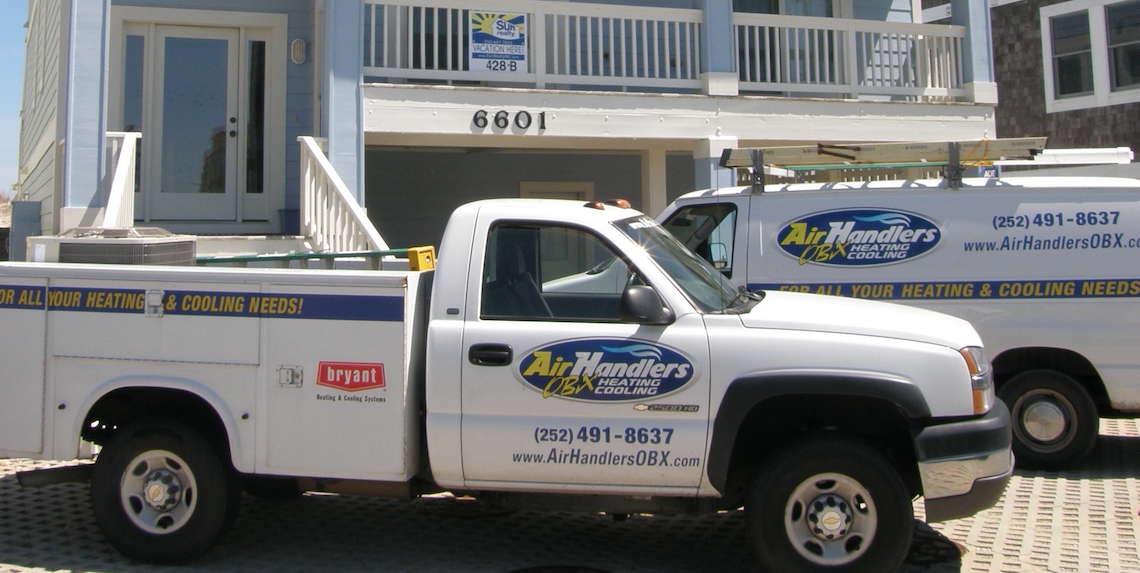
Most Outer Banks homeowners depend on their HVAC system to get them through both the humid coastal summers and the damp, windy winters that roll in off the Atlantic. That year-round workload — combined with salt air, sand, and humidity — puts more stress on a heating and cooling system here than in most inland climates. Without regular maintenance, that stress shows up as higher energy bills, uneven comfort, and, eventually, a system that fails when you need it most.
Scheduling a professional HVAC tune-up at least once a year, ideally in the fall, is the most reliable way to catch small problems before they become expensive ones and to make sure your system is ready for winter.
Why Fall Is the Right Time for an OBX Tune-Up
By the end of an Outer Banks summer, most air conditioning systems have logged months of near-constant runtime in salty, humid air — conditions that accelerate coil corrosion and put extra strain on electrical components. A fall tune-up catches whatever wear that season left behind, before your system switches over to heating mode.
It’s also a practical scheduling choice. Booking service in fall, ahead of the first cold snap, means you’re not competing with every other homeowner in Dare and Currituck counties who waits until their heat stops working on a 30-degree night. A pre-season visit gives a technician time to order parts or schedule follow-up work without leaving you without heat in the meantime.
What a Professional Fall Tune-Up Actually Includes
A real tune-up is more than a quick look at the thermostat. A licensed technician typically works through a checklist that covers both the mechanical and electrical health of the system:
- Tightening electrical connections and testing voltage and current draw on motors, since loose or corroding connections are a leading cause of coastal HVAC failures
- Lubricating moving parts to reduce wear on the blower motor and other components
- Inspecting the heat exchanger and testing burner combustion on furnaces, which is also a carbon monoxide safety check
- Checking gas or oil line connections and pressure
- Cleaning the condensate drain to prevent clogs and water damage
- Verifying thermostat calibration and system controls
- Assessing airflow, since restricted airflow is one of the most common — and most preventable — causes of efficiency loss
That airflow point matters more than people expect: ENERGY STAR notes that airflow problems alone can reduce a system’s efficiency by as much as 15 percent. A tune-up is largely about finding and fixing issues like that before they show up on your energy bill.
The Real Cost of Skipping Maintenance
It’s understandable to want to skip an annual service call to save money. In practice, it tends to cost more. A neglected system works harder to produce the same amount of heating or cooling, which shows up as higher utility bills long before it shows up as a breakdown. Left unaddressed, minor issues — a loose electrical connection, a dirty coil, a clogged drain — are also what tend to escalate into the repairs that require an emergency call and a replacement part that isn’t in stock.
An annual inspection, by comparison, is a predictable, modest expense. It’s the difference between fixing a $30 part in October and replacing a compressor in January.
Benefits of Regular HVAC Maintenance
Homeowners who keep up with annual tune-ups typically see:
- Extended equipment lifespan. Systems that are properly maintained generally last longer than those that aren’t, since routine service catches the wear that shortens a unit’s life.
- Lower energy bills. A well-tuned system uses less energy to reach the same temperature.
- Fewer breakdowns. Catching a failing part during a routine check is far less disruptive than a mid-winter system failure.
- Consistent comfort. Airflow, refrigerant levels, and thermostat calibration all affect how evenly your home heats and cools.
- Preserved manufacturer warranties. Many HVAC warranties require documented annual maintenance to stay valid — skipping service can void coverage on an otherwise eligible repair.
Changing air filters regularly and keeping the outdoor unit clear of debris helps too, but those homeowner tasks aren’t a substitute for a technician’s inspection. A trained tech has the tools and training to check refrigerant charge, electrical safety, and combustion — things that aren’t visible or testable without professional equipment.
Signs Your System Needs Attention Now
A few signs suggest you shouldn’t wait for your scheduled tune-up:
- Rising energy bills without a change in usage
- Uneven heating or cooling between rooms
- Unusual noises, odors, or short-cycling
- Visible rust or corrosion on outdoor components (common near the coast)
- A system that’s more than 10–15 years old and hasn’t had recent service
If any of these sound familiar, it may be worth discussing repair versus replacement with a technician rather than waiting.
Why Outer Banks Homeowners Trust AirHandlers OBX
AirHandlers OBX is a locally owned, licensed and insured HVAC company based in Harbinger, NC, serving homeowners throughout Hatteras, Southern Shores, Kitty Hawk, Kill Devil Hills, Nags Head, Duck, Corolla, and the surrounding Outer Banks communities. Our technicians have spent 30 years working on HVAC systems in this specific coastal environment, which means we know how salt air, humidity, and sand affect equipment differently here than they would fifty miles inland.
We service and repair all major brands, including Trane, Carrier, Lennox, Goodman, and Rheem, using diagnostic equipment that lets us identify problems accurately rather than guessing. We offer transparent, upfront pricing with no hidden fees, and 24/7 emergency service for the times a system fails outside normal business hours.
Frequently Asked Questions
How often should I get an HVAC tune-up? At least once a year. Many HVAC professionals recommend two visits — one in spring before cooling season and one in fall before heating season — especially for systems that run heavily in both seasons, as most do in the Outer Banks.
Is fall or spring the better time to schedule? Both matter, but if you can only schedule one, fall is generally preferable in this region: it addresses wear from the humid summer months and ensures your heating system is ready before winter demand hits.
How much does an HVAC tune-up cost compared to a repair? A routine tune-up is a fixed, modest cost. A repair caused by a problem that maintenance would have caught — a failed compressor or a cracked heat exchanger, for example — typically costs several times more, and can require full system replacement in the worst cases.
Can I do a tune-up myself? You can handle basic homeowner tasks like changing filters and clearing debris from the outdoor unit. Electrical testing, refrigerant checks, and combustion safety inspections require a licensed technician with the right equipment.
Schedule Your Fall Tune-Up
If it’s been a year or more since your system was last serviced, now is a good time to get on the schedule before the first cold front arrives. Contact AirHandlers OBX to schedule a fall HVAC tune-up, or to talk through repair and replacement options with a certified local technician.